GEOTECHNICAL ENGINEERING
BELLEVILLE ONTARIO

Geotechnical Engineering in Belleville Ontario

Knowledgeable. Thorough. Resourceful.

LEARN MORE

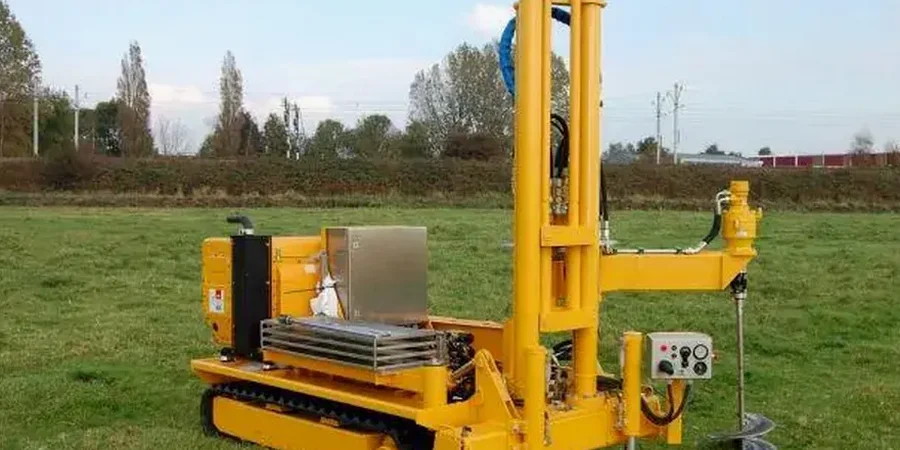
The triaxial cell is pressurized and the load frame begins its steady downward travel. Pore pressure transducers record the response while the data acquisition system plots deviator stress against axial strain in real time. For Belleville Ontario projects, this sequence runs dozens of times each week in our soils laboratory. The city sits on a complex glacial stratigraphy where grey silty till overlies fractured limestone of the Lindsay Formation at depths ranging from 4 to 12 meters. These materials demand a soil mechanics study that goes beyond index properties. Shear strength parameters, consolidation characteristics, and permeability coefficients must be measured directly because the till matrix contains lenses of varved clay that behave very differently under load than the surrounding material. A CPT test often provides the in-situ stratigraphic resolution needed before selecting undisturbed sample locations for laboratory triaxial work.

Effective stress parameters from consolidated-undrained triaxial testing on Belleville glacial till typically show a friction angle between 28 and 33 degrees with cohesion intercepts of 5 to 15 kPa.
Geotechnical Engineering in Belleville Ontario
Technical reference — Belleville Ontario

Our service areas

Local geology

ASTM D4767 governs our consolidated-undrained triaxial testing with pore pressure measurement, and this standard becomes particularly relevant in Belleville Ontario where the groundwater table frequently sits within 2 meters of grade. The Moira River corridor and proximity to the Bay of Quinte create saturated soil conditions that make effective stress analysis mandatory. A soil mechanics study for any foundation design in the city must determine both total and effective shear strength parameters. We run multi-stage triaxial tests at confining pressures that bracket the expected in-situ stress range, typically 50 to 400 kPa for shallow footings and up to 800 kPa for deeper elements. Consolidation testing follows ASTM D2435, with load increments applied in 24-hour stages to capture the time-dependent behavior of the low-plasticity clays common in the Belleville till plain. The compression index and preconsolidation pressure derived from these tests feed directly into settlement calculations that the NBCC requires for limit state design.

Relevant standards

ASTM D4767-11: Consolidated Undrained Triaxial Compression Test for Cohesive Soils, ASTM D2435/D2435M-11: One-Dimensional Consolidation Properties of Soils, NBCC 2020 Division B Part 4: Structural Design — Geotechnical Provisions, CSA A23.3: Design of Concrete Structures — Foundation Requirements

Need a geotechnical assessment?

Reply within 24h.

Email: contact@geotechnical-engineering.org

Watch the video

Why choose us

Belleville Ontario registered a population of 50,716 in the 2021 census and sits within a region classified as moderate seismic hazard under the NBCC 2020 seismic provisions, with a design spectral acceleration Sa(0.2) of approximately 0.35g. The more immediate geotechnical concern, however, is not earthquake shaking but the widespread presence of sensitive varved clay layers deposited by glacial Lake Iroquois. These clays lose significant strength when remolded, and a soil mechanics study that relies solely on index testing will not capture this behavior. We measure sensitivity ratios through field vane shear testing and confirm them in the laboratory with unconfined compression on undisturbed specimens. Foundation cuts that expose these clays to water can trigger progressive softening that standard bearing capacity equations do not account for. The 2019 Highway 401 widening near the Wallbridge-Loyalist Road interchange encountered exactly this condition, requiring redesign of approach embankment foundations after laboratory testing revealed sensitivity values exceeding 8 in the upper clay stratum.

Technical data

ParameterTypical value
Effective friction angle (phi') — glacial till28° to 33°
Undrained shear strength (Su) — varved clay lenses20 to 60 kPa
Compression index (Cc) — silty till0.08 to 0.25
Preconsolidation pressure — upper till unit150 to 350 kPa
Coefficient of consolidation (cv) at 200 kPa2 to 15 m²/year
Natural water content — Belleville till12% to 24%
Soil unit weight (gamma)18.5 to 21.0 kN/m³

Common questions

How long does a complete soil mechanics study take for a Belleville Ontario project?

A standard program including triaxial, consolidation, and index testing on samples from three to five boreholes typically requires three to four weeks from sample delivery to final report. Consolidated-undrained triaxial tests with pore pressure measurement require approximately 7 to 10 days per specimen due to saturation and consolidation stages. We can expedite to two weeks when project schedules demand it, though this limits the number of consolidation load increments.

What do you need from the field investigation before starting laboratory testing?

Undisturbed Shelby tube samples (75 mm diameter minimum) properly sealed with wax and stored upright in temperature-controlled conditions. We also need the field boring logs with SPT N-values, groundwater measurements, and sample depth notations. For Belleville Ontario sites, we request that tubes be taken from each distinct stratigraphic unit identified in the field, particularly the varved clay layers that require careful handling to preserve their structure.

What is the typical cost range for a soil mechanics laboratory program in Belleville?

Location and service area

We serve projects across Belleville Ontario and surrounding areas.

View larger map