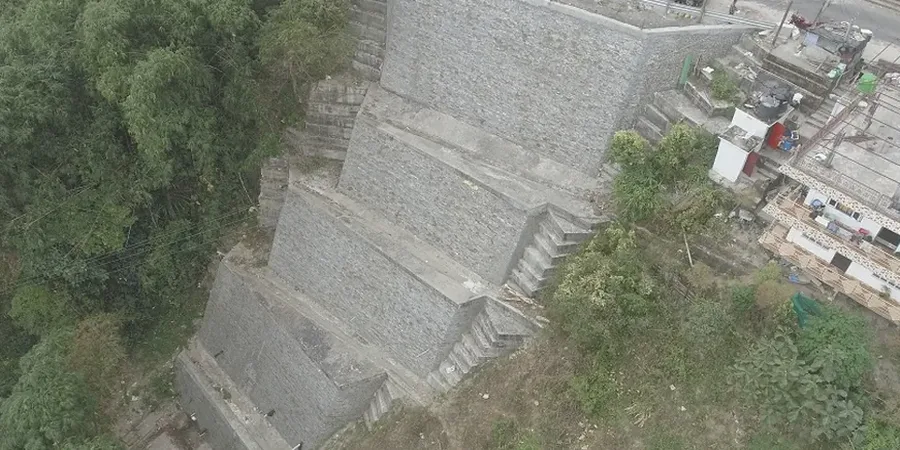
Belleville sits at roughly 75 meters above sea level on the Bay of Quinte, where the Moira River cuts through Ordovician limestone before meeting Lake Ontario. That elevation change creates a lot of sloped terrain, and not all of it is stable. Over 55,000 people live in this region, and as development pushes into the northern sections of the city, property owners keep running into the same problem: embankments that look fine during dry summers but start moving after spring thaw. A proper slope stability analysis does not just flag a potential slide, it gives you the factor of safety numbers that the city's building department wants to see before issuing permits. When we drill exploratory boreholes along a Belleville slope, we are looking at more than just soil type. We are mapping the weathered shale contact, measuring groundwater perched above the limestone, and then feeding those parameters into a limit equilibrium model that tells us whether that 2:1 cut is going to hold through a 1-in-50-year rain event. For projects near the waterfront where the glacial till is thinner, we often combine this analysis with a liquefaction assessment to cover the seismic scenario under NBCC 2020.
A slope that has stood for twenty years can fail in twenty minutes if the pore pressure regime changes and nobody ran the numbers.