GEOTECHNICAL ENGINEERING
BELLEVILLE ONTARIO
HomeLaboratoryGrain size analysis (sieve + hydrometer)

Grain size analysis (sieve + hydrometer) in Belleville Ontario

Knowledgeable. Thorough. Resourceful.

LEARN MORE

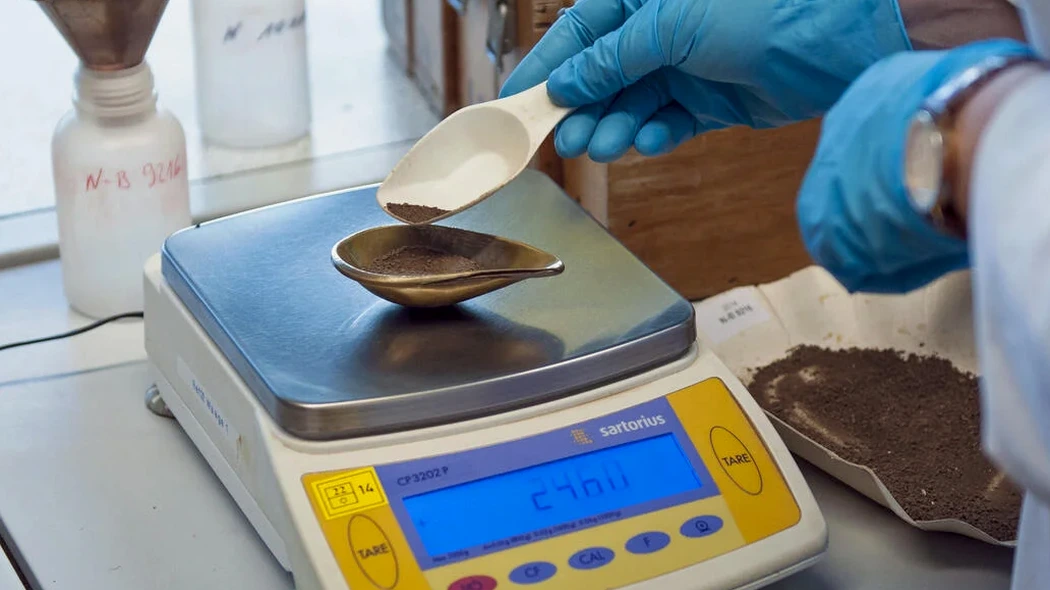
Glaciomarine clay deposits across Belleville carry fines that standard field logging cannot resolve. A full grain size analysis combining mechanical sieving and hydrometer sedimentation reveals the silt-to-clay ratio that governs consolidation rate, frost susceptibility, and drainage behaviour in local subdivisions. The Champlain Sea sediments underlying much of the city can appear uniform yet contain sensitive clay pockets where gradation shifts abruptly with depth. We run ASTM D422 and D6913 protocols on samples extracted from test pits or SPT spoon recoveries, producing a continuous particle-size distribution curve that engineers use to forecast settlement under embankment loads. For projects near the Moira River floodplain, where alluvial lenses mix organic silt with clean sand, this laboratory profile often becomes the deciding factor in foundation type selection.

A complete particle-size distribution curve tells you more about drainage and frost heave potential than a dozen blow counts alone.
Our service areas

Methodology and scope

Under the Ontario Building Code and referenced ASTM standards, grain size distribution directly feeds into soil classification per the Unified Soil Classification System (USCS). Belleville's glacially derived stratigraphy demands more than a simple wash #200 determination because the plasticity of the fines fraction — measured separately through Atterberg limits — changes how the material responds to seasonal moisture cycles. Our hydrometer analysis follows ASTM D7928, reading densities at timed intervals to capture particle diameters down to 0.001 mm. The resulting curve identifies gap-graded horizons that can cause internal erosion in retaining wall backfill, a condition observed in several Quinte West embankments where coarse sand lacked intermediate grain sizes. Reporting includes D10, D30, D60, coefficient of uniformity, and coefficient of curvature, all cross-checked against the gradation envelope specified in OPSS 1010 for granular base materials.
Grain size analysis (sieve + hydrometer) in Belleville Ontario
Technical reference — Belleville Ontario

Site-specific factors

Belleville sits within the Western Quebec Seismic Zone, where a magnitude 5.5+ event can trigger cyclic softening in saturated silty sands. A grain size curve that shows a fines content between 15 and 35 percent raises a liquefaction flag that standard SPT-based screening might miss if the sampler plugs. The Champlain Sea clay also contains dispersed sand laminae; without a hydrometer trace, fine sand lenses can be mistaken for a uniform clay bed, leading to underestimated consolidation times. On the practical side, backfill specification for frost protection — 1.2 m minimum depth in this region per the Ontario Building Code — depends on knowing whether the native material classifies as frost-susceptible silt (F-4) or clean sand (SP), a determination that rests entirely on the laboratory gradation results.

Need a geotechnical assessment?

Reply within 24h.

Email: contact@geotechnical-engineering.org

Relevant standards

ASTM D422-63(2007) – Standard Test Method for Particle-Size Analysis of Soils, ASTM D6913/D6913M-17 – Sieve Analysis of Soils, ASTM D7928-17 – Hydrometer Analysis for Particle-Size Distribution, Ontario Provincial Standard OPSS 1010 – Granular Base and Sub-Base Materials, ASTM D2487-17 – USCS Classification (derived from gradation and Atterberg limits)

Technical data

ParameterTypical value
Sieve range75 mm to 0.075 mm (No. 200)
Hydrometer range0.075 mm to 0.001 mm
Sample mass (dry)500 g to 5 kg depending on max particle size
Dispersing agentSodium hexametaphosphate solution per ASTM D422
Coefficient of uniformity (Cu)D60 / D10
Coefficient of curvature (Cc)(D30)² / (D60 × D10)
Reporting formatSemi-logarithmic gradation curve with USCS classification

Common questions

How much does a grain size analysis with sieve and hydrometer cost in Belleville?
When is a hydrometer analysis required instead of just a sieve test?

A hydrometer analysis becomes necessary when more than 12% of the sample passes the No. 200 sieve, because sieve-only methods cannot distinguish silt from clay. This distinction matters for settlement calculations, frost heave classification, and assessing the drainage characteristics of Belleville's glaciomarine silts.

What sample quantity do you need for a full gradation test?

We require approximately 500 grams of dry material for fine-grained soils and up to 5 kilograms for sandy gravels. Samples should be sealed in moisture-proof bags immediately after field collection to preserve the in-situ water content, which we measure before oven-drying and sieve processing.

Location and service area

We serve projects across Belleville Ontario and surrounding areas. More info.

View larger map