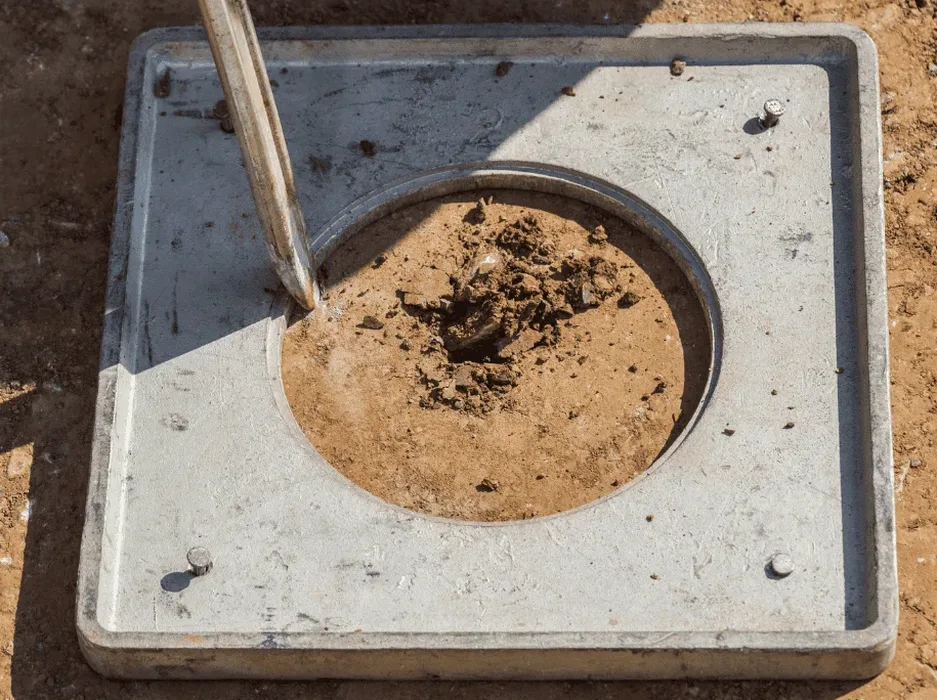
Our Belleville liquefaction work starts with the rig on site. Standard penetration testing drives a split-spoon sampler into Bay of Quinte silts and sands while we record blow counts and retrieve disturbed samples. Back at the lab, we run grain-size distributions under ASTM D422 for fines content and plasticity index checks on the minus-40 fraction. For critical projects we pair field data with CPT testing to capture continuous tip resistance and sleeve friction profiles, then feed everything into the Seed-Idriss simplified procedure. A full report maps factor of safety against liquefaction for each critical layer at the Belleville site.
Liquefaction isn't about total strength, it's about pore pressure. A sand that holds 200 kPa drained can fail at zero effective stress when shaking spikes the water between grains.