Knowledgeable. Thorough. Resourceful.
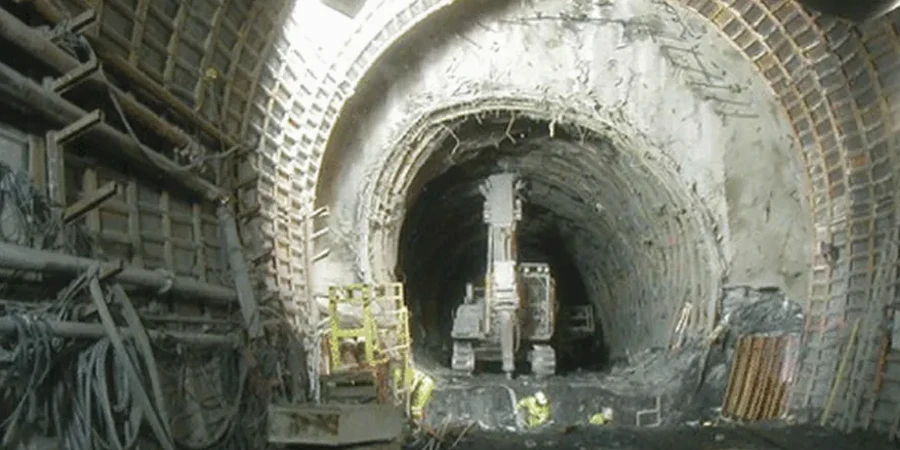
LEARN MOREUnderground excavations in Belleville, Ontario, encompass the full spectrum of subsurface construction activities required to create tunnels, shafts, and deep foundations within the region's complex geological profile. This category is critical for municipal infrastructure, commercial developments, and industrial projects that demand space-efficient solutions beneath the surface. From sewer and watermain tunnels to underground parking structures and transit corridors, the discipline integrates geotechnical investigation, structural design, and construction monitoring to ensure safety and longevity. In Belleville, the interplay between urban density and the underlying limestone bedrock makes underground excavation both a necessity and a technical challenge, requiring specialized local knowledge of soil behavior and groundwater conditions.
The geological context of Belleville is dominated by the limestone plains of the Great Lakes Lowlands, overlaid by variable deposits of glacial till, silt, and soft clay. Much of the city rests on shallow bedrock of the Bobcaygeon Formation, a Middle Ordovician limestone that presents excellent bearing capacity but significant excavation difficulty due to its hardness and occasional karst features. Overlying soils, particularly in the lower-lying areas near the Moira River and Bay of Quinte, include compressible silty clays and loose alluvial deposits that demand rigorous geotechnical analysis for soft soil tunnels. Groundwater levels fluctuate seasonally and can be perched within the overburden, requiring dewatering and careful face stability control during tunneling. These conditions mean that every underground project must begin with a thorough understanding of the local stratigraphy and hydrogeology.
Canadian and Ontario-specific regulations govern all underground excavation work in Belleville. The Occupational Health and Safety Act (OHSA) and its Regulations for Construction Projects (O. Reg. 213/91) mandate strict protocols for trenching, shoring, and confined space entry. The Ontario Building Code (OBC) references CSA S413 for parking structures and CSA Z797 for access scaffold, while the Canadian Foundation Engineering Manual provides guidance on deep excavation support. For public infrastructure, the City of Belleville's own engineering design standards and the Ministry of Transportation's OPSS specifications control materials and methods. Crucially, any excavation deeper than 3 meters or within the zone of influence of existing structures requires a professional geotechnical engineer to design and seal the temporary works, including shoring systems and monitoring plans, as part of the permit process.
Projects that demand underground excavation services in Belleville range from municipal sewer and stormwater management tunnels to deep basements for hospitals and commercial buildings. The city's aging combined sewer system frequently requires trenchless replacement or rehabilitation using microtunneling or pipe jacking beneath busy streets, where geotechnical design of deep excavations ensures minimal settlement and disruption. New developments along North Front Street and Bell Boulevard often incorporate underground parking levels that require soldier pile and lagging walls or secant pile shoring due to proximity to property lines. Industrial facilities near the waterfront may need deep shafts for pump stations or intake structures, where real-time geotechnical excavation monitoring is essential to track ground movement and pore pressure changes. Even smaller-scale projects like underpinning historic downtown buildings rely on careful excavation sequencing to preserve structural integrity.
The primary risks include encountering karst features such as voids or solution channels within the Bobcaygeon Formation limestone, which can lead to sudden ground loss or water inflow. Hard rock excavation requires careful blasting or mechanical methods to avoid overbreak and damage to adjacent structures. Additionally, the transition zones between rock and overlying soft soils create mixed-face conditions that complicate tunnel stability and require adaptive support systems.
Deep excavation shoring must comply with the Ontario Building Code, which references limit states design per the National Building Code of Canada, and the OHSA Regulation 213/91 for construction safety. Professional engineers must follow the Professional Engineers Act and the Canadian Foundation Engineering Manual for earth pressure calculations. City of Belleville permits require sealed shoring drawings and, for excavations near public rights-of-way, a separate street occupation permit with monitoring commitments.
Groundwater management depends on the depth and soil conditions. In the overburden, wellpoint dewatering or deep wells are common to lower the water table below the excavation base. Within limestone, grouting of fractures or localized pumping may be needed. All dewatering must comply with Ontario Ministry of the Environment, Conservation and Parks regulations for discharge, often requiring treatment before release to storm sewers or the Moira River watershed.
The most frequent projects in Belleville's downtown include combined sewer replacement using microtunneling, deep basements for mid-rise residential and commercial buildings, and utility tunnel installations beneath narrow streets. Underpinning of heritage structures is also common when adjacent deep excavations are required. These projects demand tight settlement control and vibration monitoring due to the age and sensitivity of surrounding masonry buildings.
We serve projects across Belleville Ontario and surrounding areas.