GEOTECHNICAL ENGINEERING
BELLEVILLE ONTARIO
HomeIn-Situ Testing

In-Situ Testing in Belleville Ontario

Knowledgeable. Thorough. Resourceful.

LEARN MORE
In-Situ Testing in Belleville Ontario

In-situ testing in Belleville, Ontario, delivers direct subsurface data critical for geotechnical design across the region’s glacial till, clay plains, and shallow limestone bedrock. These methods verify soil strength, compaction, and bearing capacity without sample disturbance, aligning with the Ontario Building Code and CSA A23.1 standards for field verification. Common techniques include the field density test (sand cone method) for granular compaction control and standard penetration testing for stratigraphic profiling, ensuring foundations match local ground conditions.

Residential, commercial, and municipal infrastructure projects in Belleville all rely on in-situ programs during earthworks and foundation inspections. Roadway embankments, shallow footings, and utility trenches demand real-time compaction checks, while deep excavations often pair density testing with sand cone density verification to confirm lift compliance. These field tests reduce over-excavation risk and support timely construction sign-off on the variable soils typical of southeastern Ontario.

Available services

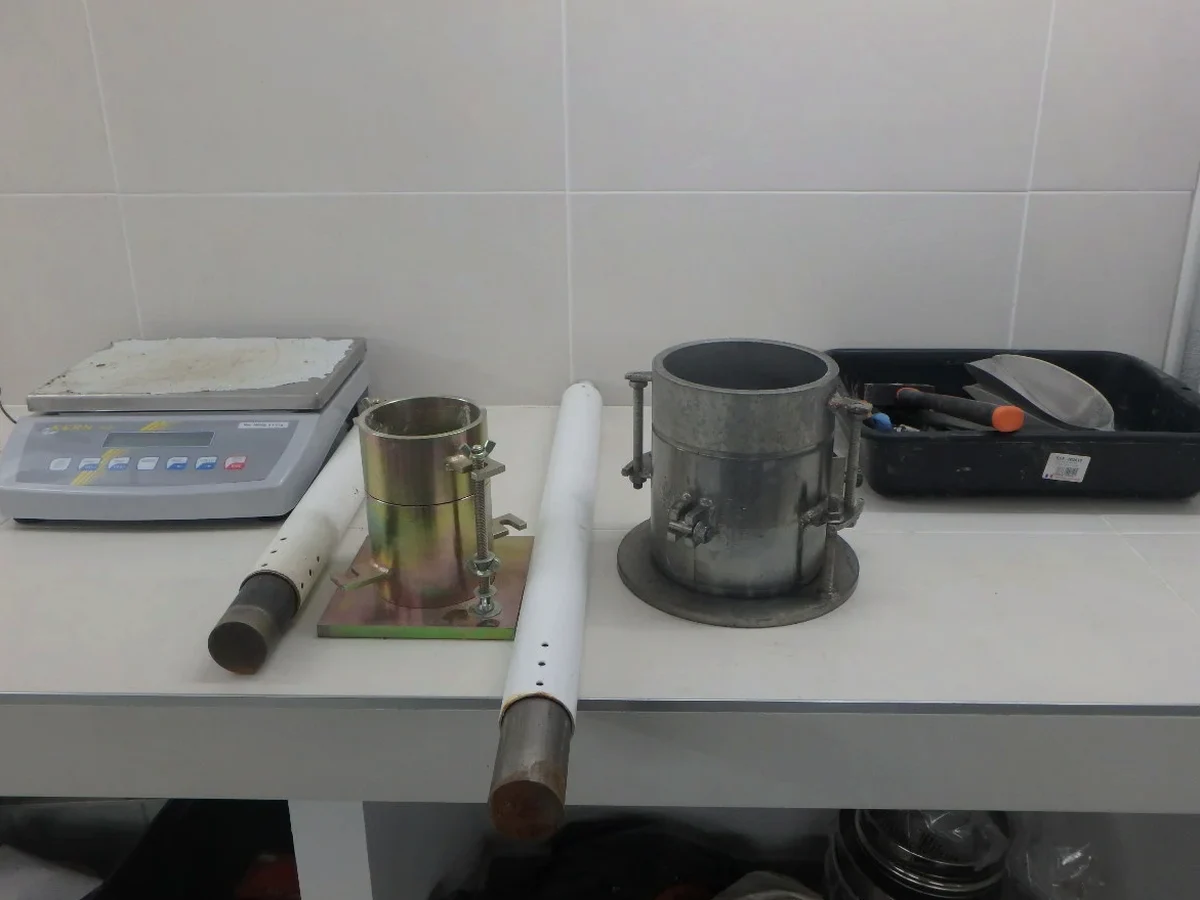
Field density test (sand cone method)

→ View details

Need a geotechnical assessment?

Reply within 24h.

Email: contact@geotechnical-engineering.org

Watch the video

Relevant standards

CSA A23.3: Design of Concrete Structures, Annex D, PTI DC35.1: Recommendations for Prestressed Rock and Soil Anchors, ASTM A416: Low-Relaxation Seven-Wire Steel Strand, FHWA-NHI-10-016: Ground Anchors and Anchored Systems

Technical data

ParameterTypical value
Design standard for anchorsCSA A23.3 Annex D (bonded anchors)
Typical anchor capacity range150 kN to 1,200 kN per strand tendon
Bond length in limestone3.0 to 6.0 m depending on RQD
Bond length in glacial till6.0 to 9.0 m for dense silty sand
Proof test load133% of design load per PTI DC35.1
Freezing depth for design1.2 m (Belleville frost penetration)
Corrosion protection classClass II (aggressive, de-icing salt exposure)

Common questions

What is the difference between active and passive anchors?

An active anchor is prestressed after installation: we tension the tendon with a hydraulic jack against the bearing plate, locking in a design force that actively compresses the retained soil or rock mass. A passive anchor is grouted in place without prestressing; it only develops resistance when the ground moves and pulls on the tendon. In Belleville, we typically use active anchors for shoring walls where movement must be controlled, and passive anchors for slope stabilization where some deformation is acceptable.

How deep do you need to drill for anchors in Belleville limestone?

The bond zone must be socketed into competent limestone below any weathered or fractured surface rock. Typical total drill depths range from 8 to 18 meters, with the bond length itself being 3 to 6 meters in good quality limestone. The exact depth depends on the rock quality designation (RQD) from the geotechnical investigation and the required anchor capacity. We use rotary percussion or down-the-hole hammer methods to penetrate the overburden and socket into bedrock.

What does anchor design and installation cost in the Belleville area?
Do you need a geotechnical investigation before installing anchors?

Yes, absolutely. We require at least one borehole within the anchor zone to determine the soil and rock profile, groundwater conditions, and rock quality. For Belleville's variable geology, we typically combine SPT sampling in the overburden with core drilling into the limestone to measure RQD and recovery. Soil resistivity and pH testing are also essential to specify the correct corrosion protection class, especially near salted roadways.

This service complements our laboratory testing work for a complete project analysis.

Location and service area

We serve projects across Belleville Ontario and surrounding areas.

View larger map