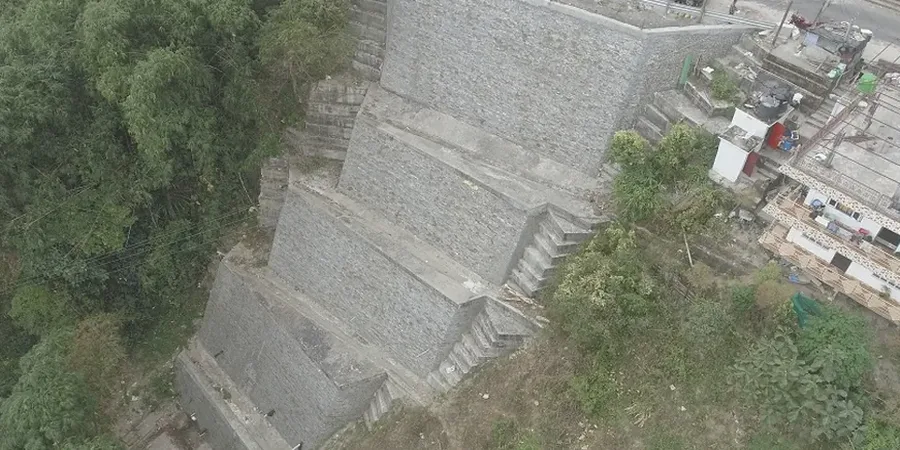
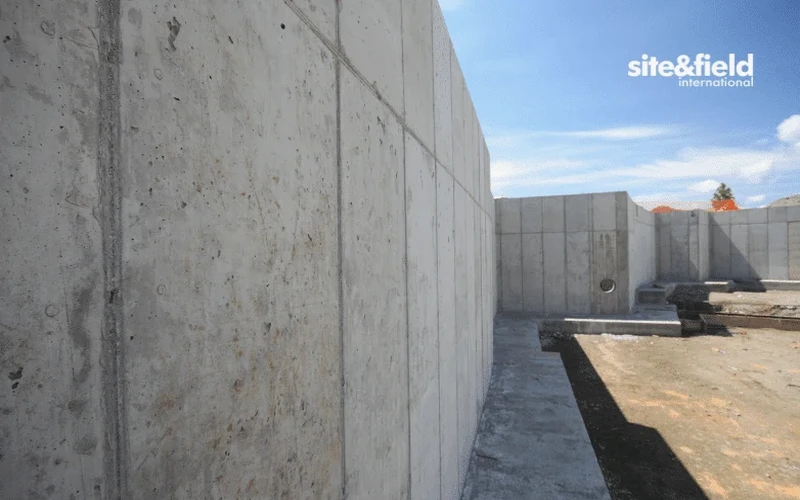
Belleville sits at roughly 75 meters above sea level where the Moira River cuts through fractured limestone before meeting the Bay of Quinte. That modest elevation hides a geotechnical reality that shapes every excavation in the city: shallow bedrock alternating with pockets of stiff Leda clay. When a contractor on Dundas Street West hits limestone at two meters and clay at five within the same lot, standard wall assumptions fall apart. The 2019 flood event along the waterfront reminded everyone that groundwater here is not a seasonal nuisance—it is a design load. We approach retaining wall design by reconciling these contrasts, running stability checks under rapid drawdown conditions and ensuring that the karst features mapped across Hastings County do not become construction surprises. For taller cuts near the hospital district, we often pair wall analysis with slope stability modeling to confirm global factors of safety before a single bucket hits the ground.
A retaining wall in Belleville is not a static structure; it is a hydraulic interface between karst drainage paths and the built environment.