GEOTECHNICAL ENGINEERING
BELLEVILLE ONTARIO
HomeInvestigationCPT (Cone Penetration Test)

CPT Testing in Belleville Ontario: Cone Penetration for Bay of Quinte Soils

Knowledgeable. Thorough. Resourceful.

LEARN MORE

More than a few Belleville projects get into trouble when they rely on SPT data alone to characterize the deeper clay and silt layers that dominate the Bay of Quinte shoreline. The standard spoon just cannot resolve thin drainage lenses or a softening clay seam at 8 meters depth with the precision a foundation engineer needs. Here is where the CPT (Cone Penetration Test) changes the picture completely. A single continuous push with a 10 cm² cone records tip resistance, sleeve friction, and pore pressure every few centimeters, giving a near-continuous profile of the subsurface. It is a big advantage in Belleville, where the contact between the overconsolidated glacial till and the underlying limestone can vary several meters across a single block. When the geotechnical brief calls for liquefaction triggering analysis or axial pile capacity estimates, combining the CPT with a liquefaction assessment early in the program saves both time and risk down the road.

A single CPT sounding in Belleville's sensitive clays can resolve a 5-centimeter silt seam that an SPT sampler would completely miss.
Our service areas

Methodology and scope

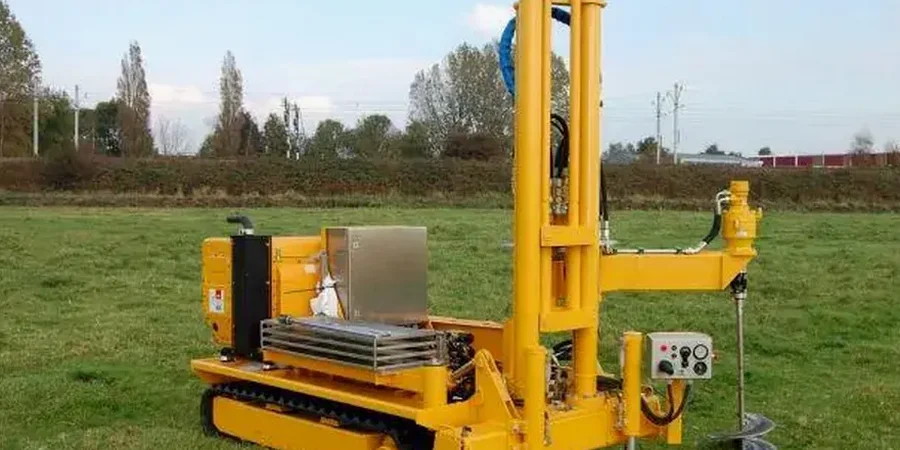
The overburden across Belleville Ontario is not just textbook Leda clay. Near the waterfront and along the Moira River, the profile typically shows 2 to 5 meters of silty sand over 10 to 18 meters of sensitive, low-plasticity clay, sitting on weathered limestone of the Lindsay Formation. A single CPT sounding here can map the transition from drained to undrained behavior without losing a single sample to remolding. We run a 20-tonne tracked rig with a 15 cm² piezocone and push at the standard 2 cm/s rate as per ASTM D5778. Pore pressure dissipation tests at strategic depths let the engineer estimate the coefficient of consolidation directly in the field. For clients who also need to verify the granular fill or the road subgrade, we usually recommend pairing the CPT session with a sand cone density test on the compacted lifts, or checking the fines content with a full grain size analysis when the friction ratio points to mixed soils. The data is processed with proprietary software that corrects for temperature drift and rod friction, delivering clean ASCII files ready for any foundation model.
CPT Testing in Belleville Ontario: Cone Penetration for Bay of Quinte Soils
Technical reference — Belleville Ontario

Site-specific factors

A four-story residential block on a former industrial lot off Front Street in Belleville started with only borehole data from the 1980s. The logs showed stiff clay to 12 meters. The structural designer went with a raft slab. During excavation, the crew hit a pocket of loose, organic silt at 3 meters—right where a buried creek channel from the 19th century had been filled. The raft design had to be rechecked, and the delay cost the developer five weeks. A single CPT sounding would have caught the drop in tip resistance and the spike in friction ratio instantly, flagging the soft zone before the first shovel hit the ground. In Belleville's karstic terrain, the risk is not just soft soil: the cone can also detect cavities in the limestone by the sudden loss of resistance and the inclination sensor, giving a warning that no conventional boring provides.

Need a geotechnical assessment?

Reply within 24h.

Email: contact@geotechnical-engineering.org

Relevant standards

ASTM D5778-20, NBCC 2020, Robertson (2016) SBTn classification chart

Technical data

ParameterTypical value
Standard followedASTM D5778-20
Cone typePiezocone (CPTu) 15 cm², 60-degree apex
Penetration rate20 mm/s ± 5 mm/s
Parameters recordedqc, fs, u2, inclination, Li (SBT index)
Maximum push depthUp to 25 m in Belleville clays (rig-limited)
Data resolution10 mm continuous
Pore pressure dissipationt50 monitoring at multiple depths per sounding
Reporting formatASCII, .cor, PDF with SBTn chart (Robertson 2016)

Common questions

What is the typical cost of a CPT test in Belleville Ontario?
How deep can the CPT push in Belleville's clays?

With a 20-tonne tracked rig, we can typically reach 18 to 25 meters in the soft to stiff clays of the Quinte region. The push stops when the tip resistance on the limestone bedrock reaches the rig's capacity or when the inclination sensor detects deviation beyond 15 degrees.

Can the CPT detect cavities in the limestone bedrock under Belleville?

Yes, the cone provides indirect evidence of karst features. A sudden drop in tip resistance combined with an increase in penetration rate and a change in the inclination measurement often indicates a void or a soft, weathered zone within the Lindsay Formation limestone. We flag these anomalies in the report for further investigation.

Is CPT data accepted for liquefaction analysis under the Ontario Building Code?

Absolutely. The NBCC 2020 and its referenced standards accept CPT-based liquefaction triggering procedures. The continuous soil behavior type index and the direct measurement of pore pressure make the CPT the preferred tool for liquefaction assessment in the silty sands found along the Bay of Quinte shoreline.

How long does a CPT test take on site in Belleville?

A single 20-meter sounding with three pore pressure dissipation tests typically requires 2 to 3 hours of field time. The setup and breakdown of the rig add about one hour on each end. The data report is usually delivered within two business days.

Location and service area

We serve projects across Belleville Ontario and surrounding areas.

View larger map