GEOTECHNICAL ENGINEERING
BELLEVILLE ONTARIO
HomeLaboratoryAtterberg limits

Atterberg Limits Testing in Belleville Ontario

Knowledgeable. Thorough. Resourceful.

LEARN MORE

The clay plains around Belleville have a reputation. Heavy, moisture-sensitive ground that shifts with the seasons. The Bay of Quinte moderates temperatures but adds humidity that keeps fine-grained soils in a delicate balance. A dry summer can shrink the clay. A wet fall can turn it to slurry. Atterberg limits pin down exactly where that transition happens. For any builder breaking ground in Belleville, knowing the liquid limit and plastic limit separates a stable foundation from a call-back nightmare. We run these tests to ASTM D4318 in our accredited lab, giving contractors a clear picture of the soil’s personality before concrete hits the ground. This data pairs well with a grain-size analysis when fines content needs verification beyond simple classification.

A plasticity index above 20 in Belleville clay demands either subgrade treatment or a redesigned foundation section. The numbers do not negotiate.
Our service areas

Methodology and scope

A recent warehouse project off Wallbridge-Loyalist Road ran into trouble. The site looked dry on the surface. Two meters down, the gray silty clay told a different story. The plasticity index came back at 22 percent. Moderate expansion potential. The geotechnical engineer adjusted the footing design and specified a moisture-conditioned subgrade. That pivot saved the owner from slab distress within the first two freeze-thaw cycles. Our Atterberg limits procedure quantifies three critical boundaries: the liquid limit where soil flows under its own weight, the plastic limit where it crumbles rather than rolls, and the shrinkage limit where volume loss stops. Combined with a Proctor test, the contractor locks in compaction targets that match the native material rather than fighting against it.
Atterberg Limits Testing in Belleville Ontario
Technical reference — Belleville Ontario

Site-specific factors

The glacial Lake Iroquois left behind thick sequences of laminated clay across Hastings County. Belleville sits squarely on this deposit. When the water table rises in spring, these clays absorb moisture and swell. When summer drought hits, they crack and lose bearing. Without Atterberg limits, a contractor is guessing how much movement to expect. A low plasticity index suggests the soil can tolerate moisture swings without major volume change. A high PI is a red flag. The Ontario Building Code references these values indirectly through foundation design tables. Ignoring them risks differential settlement, frost heave, or cracked slabs. In seismic terms, soft clay also amplifies ground motion—something the NBCC accounts for in site classification.

Need a geotechnical assessment?

Reply within 24h.

Email: contact@geotechnical-engineering.org

Watch the video

Relevant standards

ASTM D4318-17e1 – Standard Test Methods for Liquid Limit, Plastic Limit, and Plasticity Index of Soils, ASTM D2487-17 – Unified Soil Classification System (USCS), Ontario Building Code (OBC) – Foundation design provisions referencing soil classification

Technical data

ParameterTypical value
Test standardASTM D4318-17e1
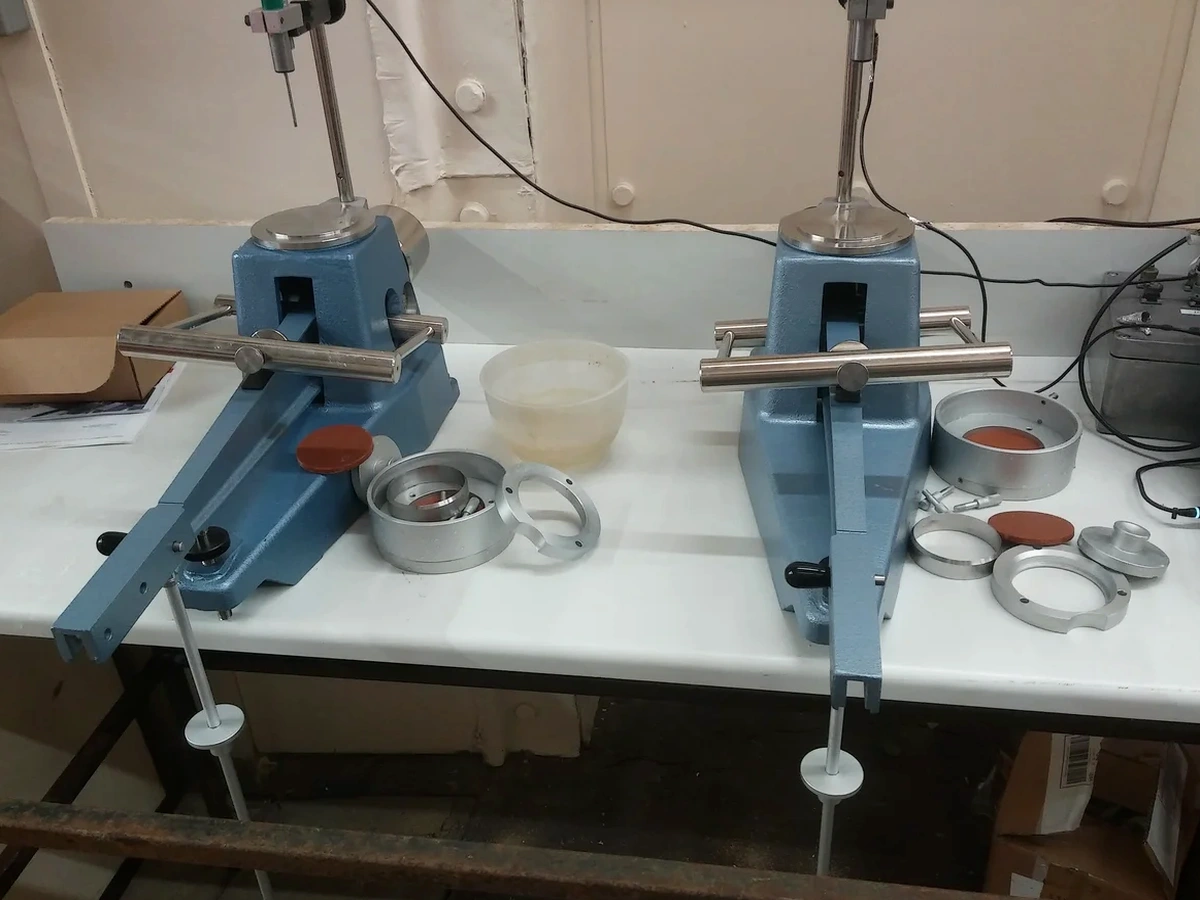
Liquid limit deviceCasagrande cup or fall cone
Plastic limit methodRolling thread (3.2 mm diameter)
Sample preparationOven-dried, passing No. 40 sieve
Plasticity index (PI)LL minus PL
Liquidity indexComputed from natural water content
Typical Belleville range (PI)8 to 28 percent
Report turnaround3–5 business days

Common questions

How much does Atterberg limits testing cost in Belleville Ontario?
How long does the test take from sample drop-off to report?

We deliver results in 3 to 5 business days for routine Atterberg samples. Rush turnaround is available when the contractor needs data to keep the earthworks schedule moving.

What soil types in Belleville need Atterberg limits testing?

Any fine-grained soil with more than 50 percent passing the No. 200 sieve. Belleville’s glacial lake clays and silty deposits nearly always require Atterberg limits for proper USCS classification and foundation assessment.

Why is the plasticity index important for a shallow foundation in this region?

The PI tells the engineer how much volume change to expect with moisture fluctuation. In Belleville’s Lake Iroquois clay, a PI above 20 signals moderate to high expansion potential, which directly influences footing depth and subgrade preparation requirements under the Ontario Building Code.

Location and service area

We serve projects across Belleville Ontario and surrounding areas.

View larger map