GEOTECHNICAL ENGINEERING
BELLEVILLE ONTARIO
HomeLaboratoryProctor test (Standard or Modified)

Proctor Testing in Belleville Ontario: Standard & Modified Compaction

Knowledgeable. Thorough. Resourceful.

LEARN MORE

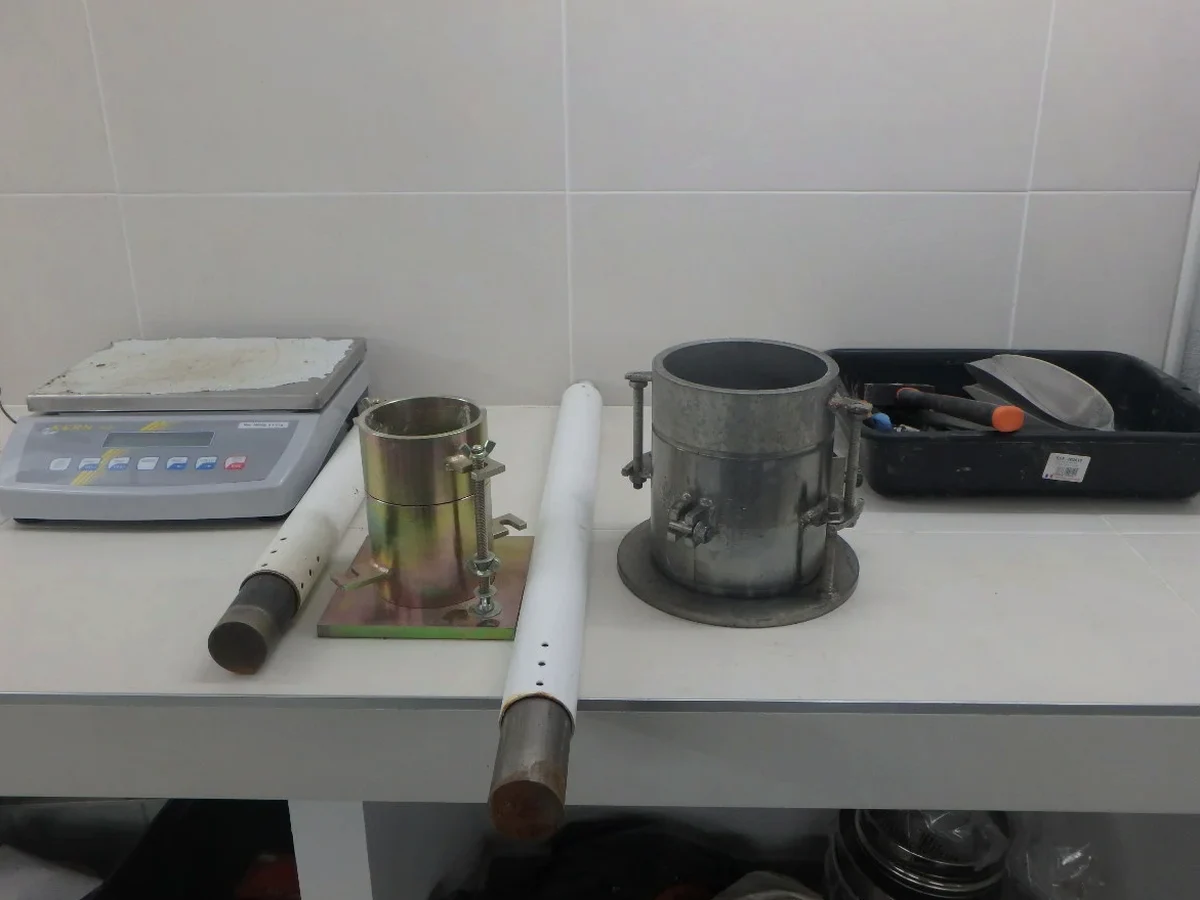
Last month we tested fill for a new subdivision off Wallbridge-Loyalist Road. The clay had sat wet all spring. The contractor needed a Modified Proctor curve fast to hit 98% compaction before the next rain. That is the reality in Belleville Ontario. Our lab runs Proctor tests daily. We know the local till. We know the limestone bedrock. And we know how fast moisture content swings in May. A reliable grain size analysis often runs alongside to confirm the fines fraction, because silty clays here compact differently than clean sands. We follow ASTM D698 and D1557. No shortcuts.

A Proctor curve built on a non-representative sample is worse than no curve at all. We always split and retain a portion for moisture conditioning verification.
Our service areas

Methodology and scope

The freeze-thaw cycles in Belleville Ontario punish poorly compacted fill. Winter frost reaches a meter deep. Come April, the ground heaves if air voids were too high. That is why we calibrate every Proctor curve to the specific borrow source. One pit off Highway 62 might yield a sandy silt with a maximum dry density of 1.92 g/cm³. Another near the Moira River gives lean clay at 1.74 g/cm³. Same compactive effort. Totally different numbers. We pair the Proctor with a sand cone density test in the field to verify the contractor is actually reaching the specified relative compaction. The lab curve means nothing if the field density does not match.
Proctor Testing in Belleville Ontario: Standard & Modified Compaction
Technical reference — Belleville Ontario

Site-specific factors

The limestone plain underlying Belleville Ontario creates a specific risk: perched groundwater in fractured rock overlain by dense till. If the contractor over-compacts a moist clay fill above a weeping rock seam, pore pressure builds and the subgrade fails during proof-rolling. We have seen it happen on Phase 2 of a commercial park near Highway 401. The Proctor curve looked perfect in the lab. The problem was field moisture control. That is why we always recommend running in-situ permeability tests when the water table is within two meters of the formation level. Knowing the drainage characteristics prevents expensive rework.

Need a geotechnical assessment?

Reply within 24h.

Email: contact@geotechnical-engineering.org

Relevant standards

ASTM D698-12: Standard Test Methods for Laboratory Compaction Characteristics of Soil Using Standard Effort, ASTM D1557-12: Standard Test Methods for Laboratory Compaction Characteristics of Soil Using Modified Effort, ASTM D2216: Standard Test Methods for Laboratory Determination of Water Content of Soil and Rock, CSA A23.1: Concrete Materials and Methods of Concrete Construction (referenced for compaction of granular subbase), OPSS.MUNI 501: Compacting (Ontario Provincial Standard Specification for municipal works)

Technical data

ParameterTypical value
Standard Test MethodASTM D698 Method A
Modified Test MethodASTM D1557 Method C
Mold Volume944 cm³ (1/30 ft³)
Standard Compactive Effort600 kN-m/m³
Modified Compactive Effort2700 kN-m/m³
Typical Maximum Particle Size19 mm (3/4 inch) for 4-inch mold
Sample PreparationDry or wet method, oven-dried at 110°C
Points on CurveMinimum 5 points, including peak

Common questions

What does a Proctor compaction test cost in Belleville Ontario?
How much soil do I need to deliver for a Proctor test?

Bring us about 25 kg of material in sealed buckets. For the 4-inch mold we need enough to run at least five moisture points, plus extra for moisture conditioning checks. Make sure the sample is representative of the lift being placed. Avoid segregation during transport.

Which Proctor method does Ontario building code require?

The Ontario Building Code references the National Building Code of Canada, which defers to ASTM standards. For engineered fill under footings, OPSS.MUNI 501 typically specifies Modified Proctor (ASTM D1557) with a minimum 98% relative compaction. Standard Proctor is more common for landscaping and shallow utility trenches.

Location and service area

We serve projects across Belleville Ontario and surrounding areas.

View larger map