GEOTECHNICAL ENGINEERING
BELLEVILLE ONTARIO
HomeIn-Situ TestingField density test (sand cone method)

Field Density Tests (Sand Cone Method) in Belleville Ontario

Knowledgeable. Thorough. Resourceful.

LEARN MORE

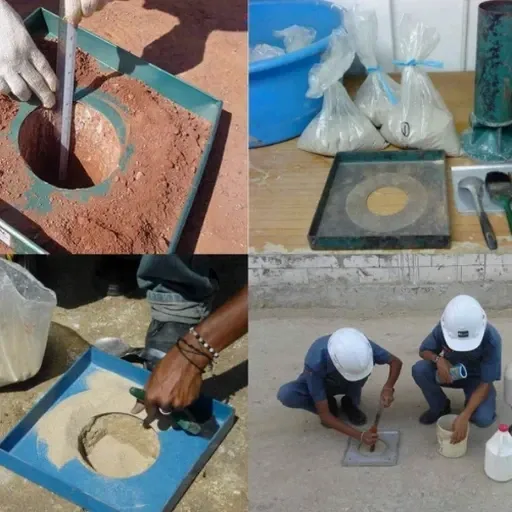
Belleville's position on the Bay of Quinte means construction sites frequently encounter compacted glacial till, silty sands, and clay plains that shift with the freeze-thaw cycles typical of eastern Ontario winters. Verifying achieved density after compaction isn't just a specification checkbox; it prevents differential settlement that cracks pavements and foundations when spring thaw saturates the subgrade. The Proctor tests we run in the lab establish the reference maximum dry density, and then our field crew uses the sand cone apparatus to compare in-place values directly, giving the site supervisor actionable data before the next lift goes down.

A single sand cone test on a utility trench in Belleville's clay till can reveal whether the backfill will settle two inches in the next five years or stay level for the life of the structure.
Our service areas

Methodology and scope

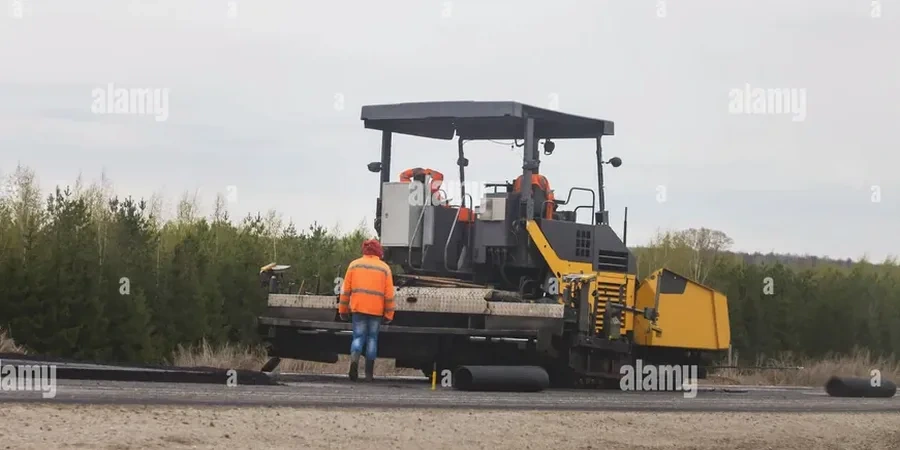
The equipment deployed across Hastings County includes calibrated one-gallon sand jars, precision base plates machined for Ottawa sand graded between the No. 10 and No. 200 sieves, and digital scales readable to 1 gram. On a Belleville commercial pad where structural fill extends three or four feet deep, the technician excavates a hole roughly the diameter of the plate and carefully recovers all loose material into a sealed bag for moisture content determination. This procedure, governed by ASTM D1556 and referenced in Ontario Provincial Standard OPSS 501, provides the most direct correlation to the laboratory maximum dry density achievable with the site's borrow material. When the contractor is placing crushed granular for a roadway on Wallbridge-Loyalist Road, the test pinpoints zones that need re-rolling before asphalt arrives, and we often pair the compaction verification with grain size analysis to confirm the aggregate gradation hasn't segregated during handling.
Field Density Tests (Sand Cone Method) in Belleville Ontario
Technical reference — Belleville Ontario

Local considerations

The contrast between the limestone bedrock near the Moira River downtown and the thick glaciolacustrine clays spreading toward the Sidney Township boundary creates very different compaction risk profiles within the same municipality. On a site close to the river where fractured limestone lies only a meter down, the structural fill compacts reliably, but the real hazard is the transition zone where engineered fill feathers out against natural stiff clay: differential stiffness there can shear underground services over time. Out on the clay plains, the risk shifts to moisture sensitivity; over-compacting silty clay at two percent above optimum can create a slickensided surface that actually loses strength, and our sand cone readings paired with oven-dried moisture samples catch that condition before the footing is poured. Municipal inspectors in Belleville regularly require sand cone reports for engineered fill under building permits, and the test record is what stands between a signed-off backfill and a costly re-excavation order.

Need a geotechnical assessment?

Reply within 24h.

Email: contact@geotechnical-engineering.org

Applicable standards

ASTM D1556 - Standard Test Method for Density and Unit Weight of Soil in Place by Sand-Cone Method, AASHTO T-191 - Density of Soil In-Place by the Sand-Cone Method, OPSS 501 - Compacting, ASTM D2216 - Laboratory Determination of Water (Moisture) Content

Technical parameters

ParameterTypical value
Standard referencedASTM D1556 / AASHTO T-191
Cone calibration sandGraded Ottawa sand (passing No. 10, retained No. 200)
Typical test depth150 mm to 200 mm below surface
Minimum test hole volumeEquivalent to largest particle size × 4
Reported density metricDry density, % of Proctor maximum, moisture content
Applicable OPSS specOPSS 501 Compacting (granular and earth fill)
Frequency guidance (CSA A23.3)One test per 150 m³ of placed fill per lift

Frequently asked questions

What does a sand cone density test cost on a typical Belleville site?

Most residential and light commercial jobs in Belleville fall between CA$150 and CA$220 per individual test point, with the rate influenced by access conditions and the number of points scheduled on the same mobilization. A larger earthworks project with twenty or more points typically benefits from a reduced per-test rate.

How quickly can we get the compaction results after the test?

The field dry density and percent compaction relative to the Proctor curve are calculated on site within fifteen minutes, so the crew knows immediately whether to continue or re-roll. The formal signed PDF report with moisture content, calibration data, and location plan follows by email the same business day.

Which fill materials can be tested with the sand cone method?

The method works reliably on granular and fine-grained soils with maximum particle sizes under 50 mm, which covers typical Belleville structural fill, OPSS Granular B, and select clay till. It is not suitable for coarse rockfill containing cobbles larger than the test hole diameter; for those we recommend alternative nuclear gauge or water replacement techniques.

How many test points does the Belleville building department require?

The Ontario Building Code references CSA A23.3, which suggests one field density test per 150 cubic metres of placed fill per lift, but the Belleville chief building official may stipulate a tighter frequency for sensitive soils or deep fills. We coordinate with the municipal inspector during the pre-construction meeting to lock in the exact schedule before earthworks start.

Location and service area

We serve projects across Belleville Ontario and surrounding areas.

View larger map