GEOTECHNICAL ENGINEERING
BELLEVILLE ONTARIO
HomeInvestigationSPT (Standard Penetration Test)

Standard Penetration Testing in Belleville Ontario: Reliable SPT N-Values

Knowledgeable. Thorough. Resourceful.

LEARN MORE

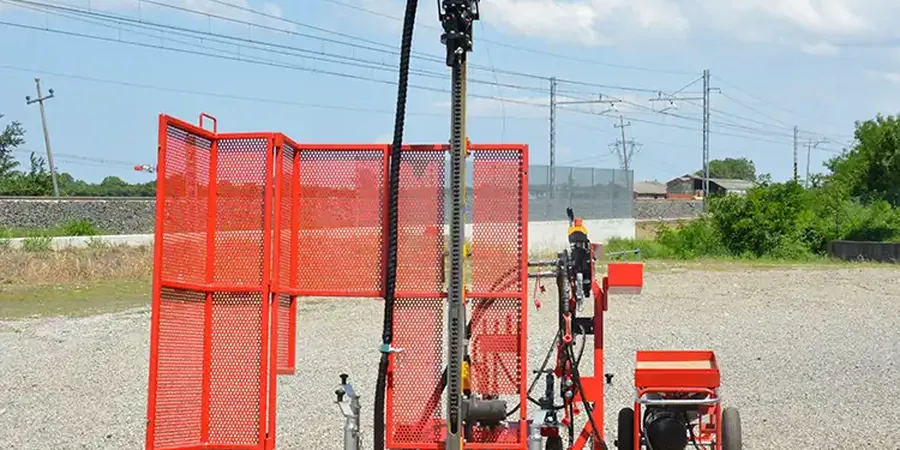
A three-storey mixed-use building on North Front Street hit refusal at less than two metres during preliminary exploration. The contractor had assumed competent limestone but instead encountered dense glacial till with nested cobbles—classic Belleville subsurface. Standard Penetration Testing sorted it out fast. SPT remains the backbone of site investigation across southeastern Ontario because it delivers a blow count and a sample in one go. For projects along the Moira River or up toward the 401 corridor, the test cuts through guesswork when overburden stratigraphy is erratic. We run the SPT rig on truck-mounted or track-mounted setups depending on access, and we log every six-inch increment so the geotechnical engineer gets a profile that stands up to NBCC 2020 and Ontario Building Code review. Pairing the SPT with grain-size analysis helps distinguish a well-graded till from a silty sand lens—critical when bearing capacity varies across a single building footprint.

SPT N-values in Belleville’s glacial till often jump from 8 to refusal within a single drive—that transition defines the bearing stratum.
Our service areas

Methodology and scope

Belleville winters are not gentle on subsurface work. Frost penetration reaches 1.2–1.5 metres, and spring thaw turns low-lying clay plains into a saturated mess. The SPT procedure here demands careful casing through the upper weathered crust before the split-spoon ever touches undisturbed material. We follow ASTM D1586-18 with a 140-pound hammer and 30-inch drop, recording N-values at every 1.5-metre interval or at stratum change. The real value shows up when N-values jump from single digits to refusal over half a metre—that signal often marks the contact between glaciofluvial sand and the underlying limestone bedrock, a contact that governs both bearing capacity and excavation stability. When refusal is shallow, a seismic refraction survey can map bedrock topography across the site without drilling every square metre. The SPT also recovers a disturbed sample, which lets the lab run moisture content and Atterberg limits without mobilizing a separate sampler. In Belleville’s post-glacial terrain, where sand, silt, and clay can alternate every metre, that sample is worth its weight in lab time.
Standard Penetration Testing in Belleville Ontario: Reliable SPT N-Values
Technical reference — Belleville Ontario

Site-specific factors

Belleville sits in a moderate seismic zone within the Western Quebec Seismic Zone. The National Building Code assigns a site class based on the upper 30 metres of ground, and SPT blow counts feed directly into that classification. A site with N-values below 15 in the upper 10 metres can push a Site Class D or E designation, which raises the seismic design forces on the structure. Liquefaction screening is another calculation that starts with the SPT log. The clean-sand equivalent blow count, corrected for fines content, gets plugged into the NCEER method to estimate factor of safety against cyclic mobility. In the low-lying areas south of Dundas Street, where granular fill overlies saturated silty sand, a single SPT borehole without liquefaction analysis leaves a gap in the geotechnical report that a plans examiner will catch. The consequence of skipping it is not theoretical—post-liquefaction settlement can exceed 100 mm, enough to shear utility connections and crack slab-on-grade.

Need a geotechnical assessment?

Reply within 24h.

Email: contact@geotechnical-engineering.org

Relevant standards

ASTM D1586-18, NBCC 2020 (Division B, Section 4.1.8), Ontario Building Code (O.Reg. 332/12), ASTM D6066-11 (N1(60) energy correction), NCEER-97-0022 (liquefaction screening)

Technical data

ParameterTypical value
Hammer typeSafety hammer, 140 lb (623 N) with rope and cathead per ASTM D1586-18
Drop height30 inches (762 mm) — verified with measurement tape before each boring
Sampling intervalStandard 5-foot (1.5 m) intervals or at every stratum change
Borehole diameter4 to 8 inches (NX to H-size) depending on casing requirements
Energy correctionN60 and N1(60) corrections available per Seed & Idriss methodology
SamplerStandard 2-inch O.D. split spoon with check valve and basket retainer
Refusal criterion50 blows over 6 inches; test terminated and noted on log

Common questions

How many SPT boreholes does a Belleville commercial building need?

The Ontario Building Code does not prescribe a fixed number, but accepted practice for a footprint under 500 m² is three boreholes placed to capture subsurface variability. Larger or irregular footprints typically need one borehole per 200–300 m². Depth should extend to at least 1.5 times the foundation width below footing level, or to bedrock refusal if it is shallower. The engineer of record has the final say on layout.

What does an SPT test cost in the Belleville area?
Can SPT be performed during winter in Belleville?

Yes. Frozen ground requires pre-drilling through the frost layer with a rotary bit before the split spoon is deployed. In Belleville, frost depth can reach 1.5 metres by February, so winter programs schedule an extra half-day for casing and thawing equipment. The blow counts below the frost zone remain valid for geotechnical design.

What is the difference between N-value and N60?

The raw N-value is the sum of blows over the last 12 inches of penetration. N60 corrects that raw count to 60% of the theoretical free-fall hammer energy, which standardizes results across different hammer types and drill rigs. In Belleville, where automatic safety hammers are common, the energy ratio often sits around 70–80%, so the correction factor is typically 0.75–0.90. The corrected N60 feeds directly into bearing capacity and liquefaction calculations.

Location and service area

We serve projects across Belleville Ontario and surrounding areas.

View larger map